Thirty Days Without a Bonus: A Diary of Saying No to Every UK Casino Offer
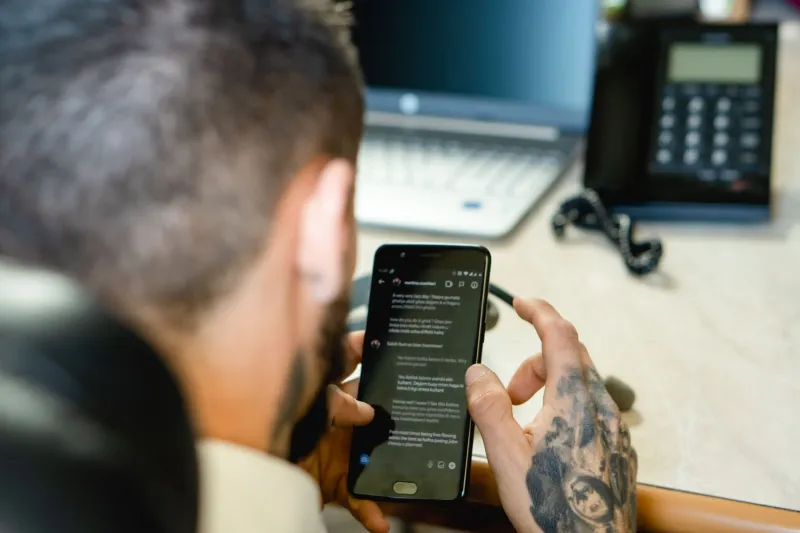
There's a particular noise a casino email makes when it lands. Not the notification — the small internal ping of interest, the one that says "free spins, no deposit, 24 hours only". For 30 days starting in early October 2026, I decided to stop hearing it. Every offer declined. Every free spin left to expire. Every VIP invitation met with a polite no. This is what happened, kept as a diary and audited at the end.
The ground rules
- Three accounts, all UK-licensed, all funded with my own money, all without a bonus attached.
- No deposit bonuses, no free spins, no cashback, no "play £10 get £30" offers, no loyalty points converted into anything.
- Withdrawals were made at normal intervals, to see whether declining offers changed the speed of payouts.
- I kept every marketing email and push notification, and counted them. Yes, all of them. The doctor has a spreadsheet and a slightly worrying amount of free time.
The point wasn't to prove bonuses are evil. Plenty of them are decent value if you read the terms and treat the wagering as part of the price. The point was to find out what happens to the relationship when you take the carrot off the table.
Week one: the inbox tells the truth
The first surprise was volume. Before the experiment I'd been receiving between four and nine promotional emails a week across the three accounts. In week one, declining everything, that number didn't drop — it went up. Ten emails, then twelve. Two of the sites clearly had automation that read a non-response as a near-miss rather than a no.
One operator — a mid-sized casino with a fondness for exclamation marks — sent three variations of the same free-spin offer in 48 hours, each slightly more generous than the last. It felt less like marketing and more like a negotiator who has misread the room.
The third site did something I didn't expect: nothing. No emails at all for six days. That silence turned out to be the beginning of a pattern.
Week two: the workarounds
Once the standard offers had been refused twice, the tactics shifted. This is the interesting bit, and it's the part that should interest regulators as much as players.
- The "no-deposit" pivot. One site, unable to interest me in a matched deposit offer, switched to a free-spin bundle with no deposit required. Technically not a deposit bonus; functionally a very effective way of getting me back on the reels. I declined, and it was offered again 72 hours later.
- The stealth bonus. Another site credited £5 in bonus funds unprompted, with an accompanying note saying it was "a little something". I hadn't opted in. Bonus funds arrived, and so did 35x wagering terms and a cap on what those funds could become. I asked support to remove it, which took two messages. Removing a bonus you didn't want should be a single click.
- The VIP approach. A personal email from an account manager, no template formatting, asking how I was finding the site. It was genuinely well written. It also arrived four days after I'd declined a reload offer, and mentioned a "bespoke package" in the third paragraph.
Week three: the quiet treatment
By the middle of the month, two of the three accounts had gone noticeably silent. Not completely — a monthly statement, a terms update — but the sales pressure fell off a cliff. My read is that these operators have a segment called "bonus-responsive" and a segment called "not worth the email send". I had moved from one to the other, and the difference was stark.
The third site kept pushing. By day 19 it had sent 21 emails. Some were genuinely good offers. Some were the same offer with a new headline. One was a survey asking why I wasn't claiming bonuses, which felt like being asked to explain my own funeral arrangements to the undertaker.
Week four: the withdrawal test
Here's the finding I keep coming back to. Withdrawals got faster.
Not dramatically, and not on every site — but across the month, my average withdrawal time on the two quieter accounts was around six hours, against a previous personal average of closer to twenty. No bonus attached means no wagering to verify, no playthrough to check, no maximum-win cap to apply. My money arrived with far less paperwork attached.
That's the bit nobody puts in the banner ad. Bonuses are often sold on the extra funds; they rarely mention the extra friction. Thirty days of declining everything turned withdrawals from a mild administrative chore into a two-tap routine, and I noticed the difference within the first fortnight.
What a month of no taught me
The honest answer is that the offer treadmill is more tiring than it is profitable. Not because every bonus is bad — some are fine, and a well-read player can absolutely use a 20x wagering offer sensibly. But the churn of it, the constant small decision about whether to claim, is a form of pressure that never quite switches off. Declining everything removed an entire category of decision from my week, and I played less as a result — not because I'd banned myself, but because the prompts that used to pull me back simply stopped landing.
Three things I'll keep from the experiment:
- Declining isn't rude and it isn't permanent. Two of the three sites stopped pushing entirely. The relationship didn't break; it just changed shape.
- Silence is a marketing segment. If you don't claim, you get filed. That's not sinister in itself, but it's worth knowing.
- Withdrawals are the real review. A site that pays in six hours without a bonus attached is telling you something about how it treats the rest of its terms.
The no-offer checklist
If you'd like to try a fortnight or a month off the bonus carousel, here's what worked:
- Turn off push notifications and app badges before you start. Willpower is a poor substitute for a settings menu.
- Use a dedicated email address for casino accounts so the offers land somewhere you don't check at breakfast.
- Ask support to remove unclaimed bonus funds rather than leaving them sitting there — a balance you can't withdraw is a nudge by another name.
- Check the wagering requirement on any offer before you say yes, and divide it by your normal stake size. That number is how long the offer owns you.
- Keep one account, not five. Most of the pressure comes from volume, and volume comes from breadth.
- If the emails still bite, unsubscribe. It's a link at the bottom of every one of them, and nobody is scoring you on loyalty.
The month cost me nothing and taught me more about how UK casinos retain players than a year of reading terms and conditions. The doctor's verdict: try it for a fortnight. The silence is surprisingly good for the nerves.
Gambling should be entertainment, not an obligation. If it's feeling like the latter, GamCare's free helpline is 0808 8020 133, and GamStop can block UK-licensed accounts across the board.