Mute Button or Muzzle? Doctor Spins Tests the Cooling-Off Promises at a Dozen UK Casinos
There is a particular silence that anyone who has tried to take a break from a UK casino site will recognise. Not the silence of an empty inbox — that would be asking too much of the modern CRM system — but the silence of an inbox that has stopped trying to sell you something. The Doctor's question this week is a simple one: when you ask a casino for a cooling-off period, does the sales pitch actually stop, or does it simply put on a cardigan and lower its voice?
To find out, I opened twelve accounts at UK-licensed casinos, opted in to marketing at every turn, and then requested cooling-off periods of 24 hours, 72 hours and seven days. Then I waited. Fourteen days of watching my phone like a man waiting for a biopsy result, except the result was usually a text about free spins.
The Experiment: Twelve Sites, Three Break Lengths
The method was deliberately boring, because boring is repeatable. Fresh account, minimum deposit, marketing consent given, a week of normal low-stakes play to establish the relationship. Then, through the responsible-gambling section or live chat, a formal request: please apply a cooling-off period of X days and stop all promotional contact for the duration.
I logged four things for each site: how quickly the request was confirmed, whether access was blocked at login or merely at the deposit screen, whether any promotional email, SMS, push notification or on-site banner arrived during the break, and how clearly the site's own terms described what a cooling-off period actually is. Names are withheld for this one — the pattern is more useful than a leaderboard, and the point is behaviour, not blame.
What the Small Print Calls a Break
Here is where the confusion starts. UK sites tend to offer three things that sound similar and behave very differently: a time-out, a cooling-off period, and self-exclusion. Full self-exclusion means the door is shut and, for multi-operator schemes, bolted across the industry. A time-out is a shorter, softer version. Cooling-off sits somewhere in the middle and, crucially, is rarely defined with the same rigour.
At four of the twelve sites, the words were used almost interchangeably. One described a cooling-off as a period during which 'account communications may continue'. Another buried the marketing question in a help-centre article three clicks from anywhere a reasonable person would look. Only five sites stated plainly, in the tool itself, that promotional contact would pause for the duration.
Who Went Quiet, and Who Kept Chatting
The good news first: six of the twelve stopped promotional email entirely within 24 hours. Their behaviour was crisp, quiet and a credit to them.
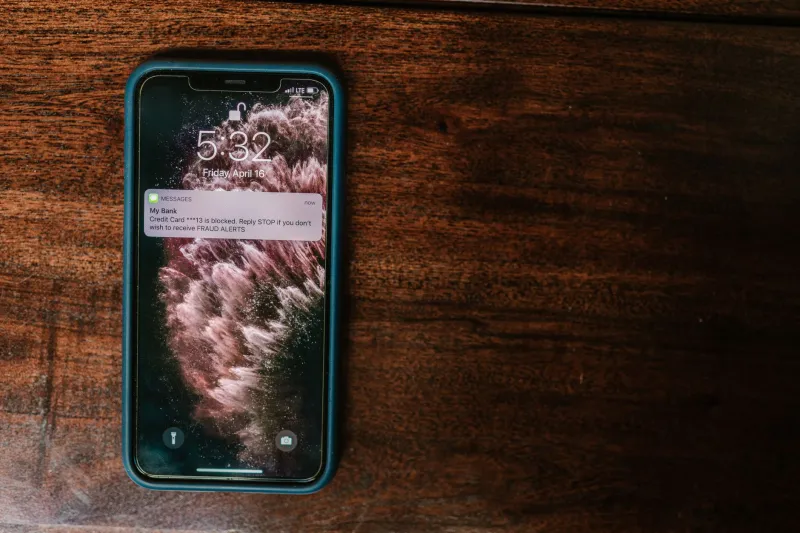
The less good news: three sites kept sending promotional email for between 48 and 72 hours after confirmation, which is roughly the marketing equivalent of a friend who says they will give you space and then texts you eleven times. Two of those three also kept sending SMS. SMS, in this audit, was the least obedient channel across the board — it is cheap, it is automated, and evidently nobody has told the SMS platform what the compliance team agreed on Monday.
Push notifications were the worst offenders. Only four sites suppressed them at all during the break, and one sent a push advertising a weekend tournament to an account that was, at that exact moment, locked out of play. Sitting on my sofa being told about a tournament I could not enter was a genuinely novel form of loneliness.
Speed of the Lockout
Access blocking was the strongest part of the picture. Ten of the twelve blocked login within minutes. Two did something subtler and, to my mind, slightly crueller: they let me log in, browse the lobby in full colour, and only refused the deposit. That is the shop window with the door locked. It is compliant. It is also a bit like putting a plate of chips in front of a man on a diet and telling him the salt is broken.
The Service-Message Loophole
Here is the phrase to watch for: 'essential service messages'. It sounds like a bank alert. In practice it can cover a remarkably wide range of content, and at three sites it covered messages that were, on any fair reading, marketing with its tie undone. 'Your weekly spin summary.' 'We noticed you have not played.' 'Your account is missing you.' One email — a genuine masterpiece — offered a bonus as a 'loyalty account update'.
If a message exists to make you play, it is marketing. The Doctor's view is that this is not a loophole so much as a bad habit that the small print has agreed to cover for.
The Doctor's Prescription: A Five-Point Cooling-Off Checklist
Before you request a break, do these five things. They take four minutes and they will save you an argument.
- Use the on-site tool where one exists, rather than live chat. Tools leave timestamps; chats leave screenshots you forget to take.
- Ask in writing, explicitly: 'Please pause all promotional email, SMS and push notifications for the duration of the cooling-off period.' Name all three channels.
- Screenshot the confirmation screen and the date. Note the exact end date of the break in your phone calendar.
- Expect a 72-hour tail on marketing. If it runs past that, complain to the operator in writing and keep the reply.
- If the marketing still does not stop, escalate — to the casino's complaints process first, then to the relevant ADR provider, and to the Gambling Commission if the pattern feels systemic.
The Prognosis
Cooling-off tools are a genuinely good idea, and most of the sites I tested have built something worth using. But a break is only a break if the advertising respects it. Six of twelve sites understood that. Three needed a nudge. Three treated the small print as a licence to keep whispering.
So the Doctor's advice is the same as it is for most things: take the break, take the screenshots, and do not assume that a paused account means a paused sales team. Silence, in this corner of the internet, has to be earned.