Hold the Line: The Doctor's Stopwatch Test of UK Casino Live Chat on Safer-Gambling Questions

Photo: Ridiculopathy, CC0, via Wikimedia Commons
The waiting room is a familiar place for any doctor. In casino support, it is also a useful diagnostic tool. If a site cannot answer a simple safer-gambling question quickly, what hope is there when a player is actually struggling?
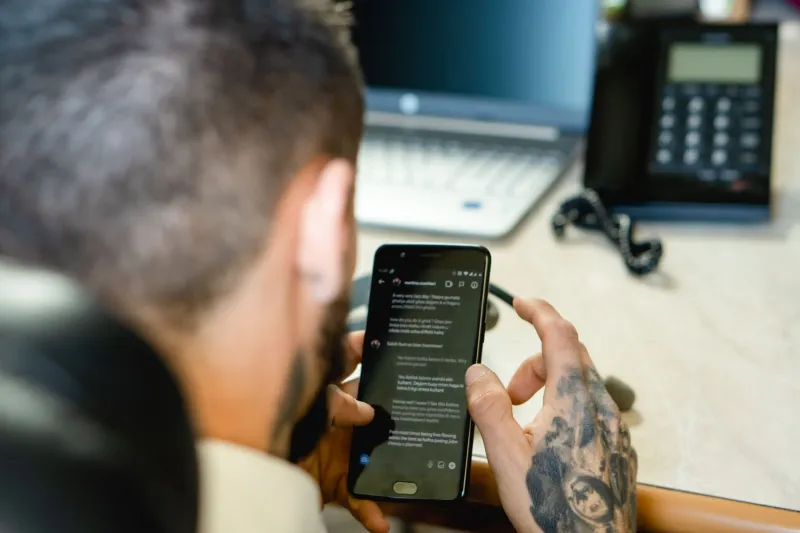
For this mystery-shopping test, we contacted the live chat teams at 15 UK-licensed casinos. We asked one question, kept the stopwatch running and recorded three things: how long it took to reach a human, how good the answer was, and whether the agent offered a clear escalation route. We did not announce ourselves as journalists. We did not ask about bonuses, odds or withdrawals. We asked about taking a break.
The question we asked
Our script was deliberately plain: 'I want to take a time-out from gambling. How do I set one up, and what happens to my active bonus and any pending withdrawal?'
That question is not a trap. It is the sort of thing a player might ask at 11pm after a difficult session. It tests product knowledge, safety awareness and basic empathy. It also tests whether the site has joined the dots between its safer-gambling tools and its bonus rules.
The stopwatch rules
We started timing when the chat window opened and stopped when a human agent gave a substantive reply. We did not count automated greetings, chatbot menus or hold music as an answer. If the agent needed to escalate, we noted the time to escalation and whether we were told what would happen next. We gave each site a quality score from A to E based on clarity, accuracy and signposting.
To keep things fair, we tested during normal UK evening hours. We used the same wording each time. We did not badger the agents. If a site offered email only, we noted that as a different kind of waiting room.
The fast lane
Four sites reached a human in under two minutes. One answered in 47 seconds. The agent knew exactly what a time-out was, explained the difference between a time-out and self-exclusion, confirmed that pending withdrawals would still be processed and said the active bonus would be frozen rather than forfeited. They then linked to the relevant help page without being asked.
That is the gold standard. It was not a scripted poem. It was a clear, calm answer that treated the question as important. The stopwatch stopped, the patient felt heard and nobody tried to sell us a spin package on the way out.
The waiting room
Seven sites took between four and 11 minutes to connect us to a human. That is not catastrophic in the grand scheme of customer service, but it is a long time when the question is about stopping gambling. Two sites kept us in a chatbot loop that repeatedly offered 'bonus help' and 'deposit issues' but never recognised the word 'time-out'. One agent eventually arrived and apologised for the delay, which was decent. Another asked us to email instead, despite the live chat window being open.
The worst experience took 19 minutes and involved three transfers. The first agent did not know what a time-out was. The second sent a link to the bonus terms. The third explained self-exclusion but could not say what would happen to the pending withdrawal. The answer was not hostile. It was simply unstructured, like a ward round with no notes.
The answer-quality triage
Response time is only half the story. A fast wrong answer is still a wrong answer. We graded five sites as A or B: clear, accurate and signposted. Six got a C: broadly correct but vague on bonus or withdrawal consequences. Four got a D or E: slow, muddled or missing the escalation route.
A common weakness was the difference between a time-out and self-exclusion. Several agents used the terms interchangeably. That matters. A time-out is usually a short break with a fixed end date. Self-exclusion is a longer commitment and should involve GamStop where appropriate. A good agent explains both without making the player feel like they are being processed.
Escalation routes
Only six sites proactively offered a next step. That step might be a link to the responsible-gambling page, an email address for the safer-gambling team or a phone number for support. The rest answered the question and stopped. No signposting, no follow-up, no 'here is how to make sure this actually happens'.
For a safety question, escalation is part of the answer. If the agent cannot set the time-out themselves, they should say who can and how quickly. If the site uses GamStop for self-exclusion, they should say so plainly. If the bonus terms are complex, they should point to the exact clause rather than a general help page.
What a good reply looks like
A good reply is short, human and specific. It confirms what the player wants to do. It explains what will happen to bonuses, bets and withdrawals. It gives the exact route to activate the tool. It says what happens next and whether the player needs to do anything else. It does not upsell. It does not use the phrase 'please be advised' unless absolutely necessary.
The best agents also asked a simple follow-up: 'Would you like me to send you the link so you have it?' That is not a sales technique. That is good triage.
Doctor's orders
If you need to ask a casino about safer gambling, do it before you need the answer in a hurry. Test the live chat with a simple question and see how it feels. Save the transcript. Check whether the reply matches the terms and conditions. If the agent seems unsure, ask for the safer-gambling team or a link to the specific policy.
The stopwatch test shows that UK casino support is not uniformly bad, but it is uneven. The fast lane exists. The waiting room also exists. The Doctor's advice is to find out which one you are in before the slots start spinning.